
WorkRate in Tobago: Science Meets Resourcefulness
Part 1 of a Three-Part Series on WorkRate’s 2025 Tobago Deployment
Part 1 focuses on systems, structure, and environment.
Part 2 will present aggregate performance and competition outcomes.
Part 3 will examine a sport-specific case study on hamstring injury mitigation in Youth Athletes.

Trinidad & Tobago
In February 2025, WorkRate founder Rondel King returned home to Tobago with a focused mission: to bring structure, sports science, and evidence-based systems to Youth Athletes preparing for the CARIFTA Games.
With Dwight Yorke Stadium closed for repairs, Tobago’s top sprinters were forced to train away from elite facilities. Diagnostics, speed work, and conditioning instead took place on the Signal Hill Secondary School field—uneven, exposed, and demanding adaptability.
Rather than viewing this as a setback, we saw an opportunity: to prove that world-class performance systems don’t rely on perfect conditions—they rely on sound principles that travel.
Deploying Tools That Clarify, Not Complicate
From the outset, the goal wasn’t technology for its own sake. It was clarity.
The WorkRate team equipped Zenith’s Youth Athletes and coaches with tools designed to make training stress, recovery, and readiness visible and actionable:
Garmin Forerunner 55 watches and heart rate monitors for live physiological tracking
Laser speed traps for sprint timing and acceleration profiling
Biomechanical movement screens to identify injury risk and monitor change
Coach education sessions linking data directly to on-field decisions
All data fed into the WorkRate Analytics Platform, giving coaches and Athletes a shared language around workload, readiness, and efficiency. For many, this was the first time training decisions were supported by objective feedback rather than intuition alone.
Systematic Training Management
Diagnostics were only the entry point.
Throughout the season, we worked closely with the Zenith staff, introducing the WorkRate Scheduling Model—a structure designed to protect health while enhancing performance.
Historically, sprinters trained at high velocity five days per week, leaving little space for neuromuscular or tissue recovery. Using physiological data and movement diagnostics, we implemented firm constraints:
High-velocity work limited to two to three days per week
Intensity aligned with readiness, not routine
Recovery treated as a performance input, not a break from work
The result was improved readiness, healthier tissue, and greater consistency when it mattered most.
On non-maximal days, Athletes engaged in aerobic and submaximal work, including swimming sessions along Tobago’s beaches—a low-impact recovery solution that used the environment as an asset rather than a limitation.
The Warm-Up: A Shared Language Across Sports
One of the most important interventions was the implementation of WorkRate’s standardized warm-up framework—the same foundational model used in our soccer environments.
This consistency is intentional.
Whether preparing sprinters in Tobago or soccer Athletes in Tampa, the underlying reality is the same: human beings move according to shared neurological and mechanical principles.
Every WorkRate warm-up is built around:
Posture and position
Rhythm and coordination
Neuromuscular readiness
From this common base, sport-specific adaptations are layered in—max-velocity mechanics for track, deceleration and change-of-direction for soccer. The foundation remains consistent; the expression changes.
This standardization builds understanding. Athletes learn how to organize their bodies before learning how to apply that organization to their sport.
A Shift in Mindset
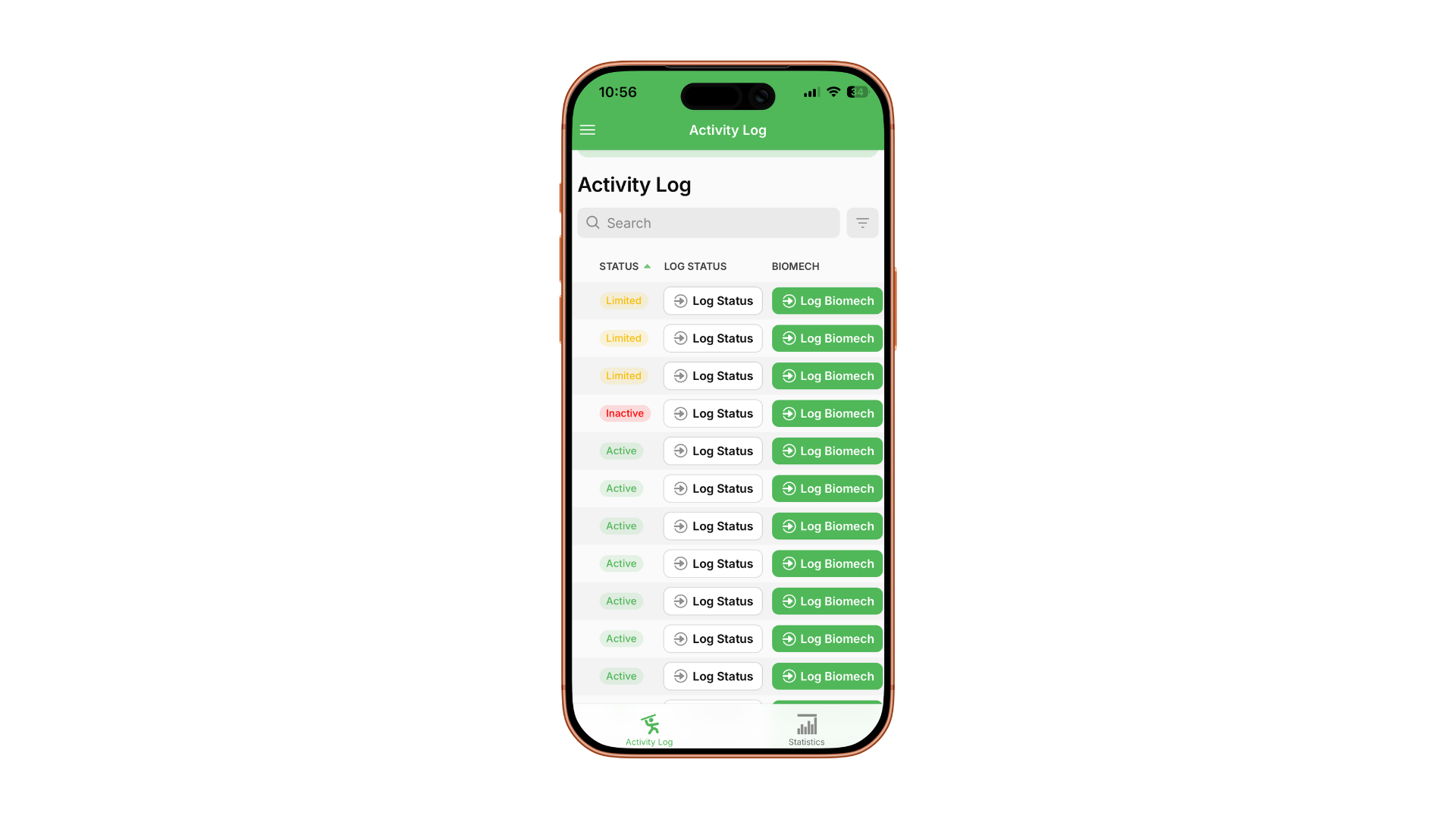
The WorkRate Platform
Over time, the impact extended beyond the field.
Athletes began to understand their own data—why certain days felt heavy, how recovery influenced output, and how small movement adjustments reduced pain and fatigue. Coaches and Athletes started speaking the same language.
The result wasn’t just fewer issues—it was confidence. Confidence rooted in preparation, not hope.
Groups became more composed under pressure, more consistent in competition, and better equipped to handle long seasons with high expectations.
Laying the Foundation
This first Tobago deployment wasn’t about navigating limitations. It was about demonstrating that science-based systems scale anywhere when they are grounded in physiology, movement, and respect for the Athlete.
By combining diagnostics, standardized preparation, and intelligent scheduling, WorkRate and Zenith built a framework that protected health while unlocking performance.
This article captures the foundation.
Part 2 of this series will present the global outcomes—performance trends, competition results, and what changed when readiness guided decision-making.
Part 3 will examine a focused case study on hamstring injury mitigation, showing how standardized warm-ups and workload control translated directly into reduced soft-tissue risk in sprint populations.
